Recently I decided I wanted to make a cake that captured the flavours of a Sticky Toffee Pudding, a family favourite in this house. I found a recipe on another blog for a date cake, and made it - it was great - but I have gradually added to it and adapted it until I feel it's pretty much 'mine'. But of course, thus far it's all been in my head, so I felt the time had come to commit it to the long-neglected blog.
This cake is superbly easy. I love this kind of 'all in one', chuck it in the food processor kind of recipes, and the fruit content means it's always moist. It keeps well for about a week, and I have even frozen it in slices to no ill effect, ready to defrost for unexpected guests. It works well as a cake with morning coffee, afternoon tea, or warmed with custard as a pudding (a drizzle of toffee sauce on it would be perfect too). All in all a great cake to have in your baking repertoire!
Sticky Toffee Date Cake
Ingredients
250g dried dates
275ml boiling water
1 tsp bicarbonate soda
175g soft light brown sugar
150g butter
3 eggs, beaten
175g self raising flour
100g raisins or sultanas
50-100g crystallised ginger (optional, and to taste)
Method
Pour the boiling water over 3 quarters of the dates and leave for 15 minutes or so to soften
Meanwhile chop the remaining dates - and the ginger, if using - and put aside.
Preheat the oven to 175 degrees celcius.
In a food processor, blend together the butter, sugar and dates, including the still-warm soaking water.
Add the eggs, then the flour and bicarb, and blend until smooth.
Stir in the chopped dates, chopped ginger (if using) and the raisins.
Pour the mixture into a greased and lined (well, I just line the base) 24cm round tin.
Bake for 40 minutes until firm in the middle, and the edges are slightly pulling away from the tin. I usually check it at 35 minutes, but in my oven 40 is pretty much spot on.
Sunday, 5 May 2019


Friday, 29 December 2017
Mumbai Toasted Cheese Sandwich
I follow a wonderful cook on Instagram who goes under the moniker @greedyinmontreal, real name Rachel. I am lucky enough to know her in person too, as she has long been a 'forum friend' from the days of the Nigella.com chat forum, but I also met her when we lived in Canada and she invited me to stay. Her posts are the highlight of my Instagram feed, and often inspire me to cook something new. This sandwich popped up on my feed, cooked by Rachel, and I knew that I just HAD to make it. It was as gorgeous as I thought it would be, and I made it several times. The recipe was scribbled on a piece of paper... which I have just found and decided that I need to commit it to my blog so I don't lose it. Of course it's elsewhere online too (see this Telegraph article) but if I have it recorded here I am less likely to forget it.
Mumbai Spiced Cheese Toastie - Diana Henry
• ½ green chilli, deseeded and chopped
• handful fresh coriander, leaves only
• leaves from 8 mint sprigs, torn
• 1 clove garlic, crushed
• sea-salt flakes, to taste
• ½ tsp caster sugar
• juice of ½ lemon
For the sandwich:
• 2 slices white bread
• 50g cheddar, Lancashire or Wensleydale, grated or very finely sliced
• 1 medium tomato, sliced
• ¼ small red onion, very finely sliced
• a pinch of ground cumin
• a pinch of ground coriander
• a pinch of ground ginger
• a pinch of ground cinnamon
• butter and oil, for frying (if you don’t have a toastie maker)
Spread the chutney over both pieces of bread. Lay the cheese, tomato and onion on one of them and sprinkle over the spices. Top with the other piece of bread.
Use a toasted-sandwich maker, if you have one, or melt a knob of butter and about a quarter of a tablespoon of oil in a frying pan and cook the sandwich over a medium heat for about three minutes on each side, weighing it down (I use a flat saucepan lid with a heavy tin on top). Be careful not to burn the outside, and adjust the heat accordingly.
The cheese should have melted. Serve immediately.
Serves 1
Mumbai Spiced Cheese Toastie - Diana Henry
INGREDIENTS
For the fresh chutney:
• handful fresh coriander, leaves only
• leaves from 8 mint sprigs, torn
• 1 clove garlic, crushed
• sea-salt flakes, to taste
• ½ tsp caster sugar
• juice of ½ lemon
For the sandwich:
• 2 slices white bread
• 50g cheddar, Lancashire or Wensleydale, grated or very finely sliced
• 1 medium tomato, sliced
• ¼ small red onion, very finely sliced
• a pinch of ground cumin
• a pinch of ground coriander
• a pinch of ground ginger
• a pinch of ground cinnamon
• butter and oil, for frying (if you don’t have a toastie maker)
METHOD
Put everything for the chutney, except the lemon juice, in a mortar and pound it. You can just chop everything together but the chutney is better if it has had a good pounding. Add the lemon juice.Spread the chutney over both pieces of bread. Lay the cheese, tomato and onion on one of them and sprinkle over the spices. Top with the other piece of bread.
Use a toasted-sandwich maker, if you have one, or melt a knob of butter and about a quarter of a tablespoon of oil in a frying pan and cook the sandwich over a medium heat for about three minutes on each side, weighing it down (I use a flat saucepan lid with a heavy tin on top). Be careful not to burn the outside, and adjust the heat accordingly.
The cheese should have melted. Serve immediately.
Serves 1
Tuesday, 5 September 2017
The Apple Diaries 2017 - Au Pair's Cake
A recipe from my friend Barbara. She produced this cake when I last popped round and I devoured a slice warm from the pan, topped with full fat creme fraiche! She very kindly sent me home with another chunk for Rob and I to share for supper which we ate with Greek yoghurt.
It's more a pudding than a cake, with a batter-like liquid holding the apples together. Totally moreish!

It's more a pudding than a cake, with a batter-like liquid holding the apples together. Totally moreish!

Giant Couscous with Preserved Lemon, Chargrilled Onion, Halloumi and Herb Dressing
Despite the long title, this is a really simple and delicious vegetarian supper dish. It's full of punchy flavours and I've also found it pretty adaptable. It's another great recipe from Waitrose, this time from their weekly free newspaper. About once a year I make a jar of preserved lemons, so it's nice to find another way to use them, aside from the predictable tagine.
Giant Couscous with Preserved Lemon, Chargrilled Onion, Halloumi and Herb Dressing
150g giant wholewheat couscous
1 tsp cumin seeds (I omit these as I don't like cumin)
1/2 Preserved Lemon, skin only, shredded
1 clove garlic, crushed
50g pistachios, roughly chopped (I've also tried cashews when I'd run out of pistachios - worked fine, it's the texture you're after)
20g pack dill, leaves roughly chopped
25g pack flat leaf parsley, leaves roughly chopped
(NB I've subbed basil and coriander for the above herbs, was delicious)
4 tbsp extra virgin olive oil
Juice of ½ lemon, plus extra to taste
2 tsp pomegranate molasses
1 bunch salad onions, trimmed
1 green chilli
250g Halloumi
2 tbsp pomegranate seeds (never bothered with these, they're just a garnish)
½ tsp sumac (likewise - optional)
Giant Couscous with Preserved Lemon, Chargrilled Onion, Halloumi and Herb Dressing
150g giant wholewheat couscous
1 tsp cumin seeds (I omit these as I don't like cumin)
1/2 Preserved Lemon, skin only, shredded
1 clove garlic, crushed
50g pistachios, roughly chopped (I've also tried cashews when I'd run out of pistachios - worked fine, it's the texture you're after)
20g pack dill, leaves roughly chopped
25g pack flat leaf parsley, leaves roughly chopped
(NB I've subbed basil and coriander for the above herbs, was delicious)
4 tbsp extra virgin olive oil
Juice of ½ lemon, plus extra to taste
2 tsp pomegranate molasses
1 bunch salad onions, trimmed
1 green chilli
250g Halloumi
2 tbsp pomegranate seeds (never bothered with these, they're just a garnish)
½ tsp sumac (likewise - optional)
1.
Rinse the couscous in a sieve under cold running water and tip into a
medium saucepan. Cover with fresh water, add a pinch of salt and bring
to the boil. Simmer for 7-8 minutes or until tender. Drain, refresh
under cold water and leave to drain well. Place into
a large mixing bowl.
2. Add the cumin seeds (if using) to a dry pan and toast over a medium heat for 1 minute, until browned and aromatic. Remove and grind to a powder using a pestle and mortar then tip into the couscous bowl with the preserved lemon, garlic, pistachios, dill, parsley, all but 2 tsp olive oil, the lemon juice and pomegranate molasses to the bowl. Mix to combine.
3. Warm a frying pan over a medium heat until smoking hot. Coat the salad onions with the remaining oil and cook along with the whole chilli for 4-5 minutes until charred. Cut the salad onions into thirds and the chilli in half, discarding the seeds. Chop the chilli and add to the couscous.
4. Cut the halloumi into thick slices, brush with oil and cook on the hot griddle for 2-3 minutes until golden on both sides. Cut into bitesize pieces and place on top of the couscous. Season and add more lemon juice if needed. Spoon into a serving dish and scatter with pomegranate seeds and sumac just before serving.
a large mixing bowl.
2. Add the cumin seeds (if using) to a dry pan and toast over a medium heat for 1 minute, until browned and aromatic. Remove and grind to a powder using a pestle and mortar then tip into the couscous bowl with the preserved lemon, garlic, pistachios, dill, parsley, all but 2 tsp olive oil, the lemon juice and pomegranate molasses to the bowl. Mix to combine.
3. Warm a frying pan over a medium heat until smoking hot. Coat the salad onions with the remaining oil and cook along with the whole chilli for 4-5 minutes until charred. Cut the salad onions into thirds and the chilli in half, discarding the seeds. Chop the chilli and add to the couscous.
4. Cut the halloumi into thick slices, brush with oil and cook on the hot griddle for 2-3 minutes until golden on both sides. Cut into bitesize pieces and place on top of the couscous. Season and add more lemon juice if needed. Spoon into a serving dish and scatter with pomegranate seeds and sumac just before serving.
Chicken Simla
An old family favourite - but we have no idea where it came from! The name suggests it might be slightly Indian, but this isn't the case. We suspect it came from a magazine, probably in the 1960s or 70s.
Anyway, wherever it's from it's a lovely tasty meal, quick to make but also smart enough to serve guests.
Chicken Simla
Serves 2
2 chicken breasts
Heaped tsp cornflour, seasoned
oil
2oz butter
1 chicken stock cube
2 tbsp dijon mustard
2 tbsp Worcester Sauce
1/4 pint double cream
1/2 pint hot water
Handful of sliced almonds, toasted (optional but nice!)
Coat chicken breasts in seasoned cornflour then shallow-fry in oil and butter in a cast-iron (Le Creuset-style) pan until browned.
In a jug mix the stock cube, hot water, dijon mustard and Worcester Sauce. Add to the chicken, and simmer for an hour.
Before serving stir in the cream.
Top with toasted sliced almonds if desired.
We usually serve this with rice and a steamed green veg. The rice is useful for soaking up all that delicious sauce!
Anyway, wherever it's from it's a lovely tasty meal, quick to make but also smart enough to serve guests.
Chicken Simla
Serves 2
2 chicken breasts
Heaped tsp cornflour, seasoned
oil
2oz butter
1 chicken stock cube
2 tbsp dijon mustard
2 tbsp Worcester Sauce
1/4 pint double cream
1/2 pint hot water
Handful of sliced almonds, toasted (optional but nice!)
Coat chicken breasts in seasoned cornflour then shallow-fry in oil and butter in a cast-iron (Le Creuset-style) pan until browned.
In a jug mix the stock cube, hot water, dijon mustard and Worcester Sauce. Add to the chicken, and simmer for an hour.
Before serving stir in the cream.
Top with toasted sliced almonds if desired.
We usually serve this with rice and a steamed green veg. The rice is useful for soaking up all that delicious sauce!
Brown Rice with Chorizo and Egg
I don't tend to buy many food magazines, but somehow I seem to accumulate piles of cut out recipes. We pick up the free Waitrose magazine every month which always seems to have lots of lovely things to cook, and this, coupled with recipes I snip out of newspapers, or photograph from friends' cookbooks means I feel like I'm fighting a losing battle to keep them organised.
So I've decided to use this blog to keep a record of the ones we've cooked, enjoyed, and would like to make again. This should mean I don't need to keep so many bits of paper around the kitchen... we will see how that goes! Some blog posts might have photos to accompany them, but many won't.
Anyway, here is a lovely 'midweek' recipe that I found in the Waitrose magazine last month. It's really versatile because you can add in any ingredients that need using up (at this time of year I like/need to throw in a chopped courgette to pretty much anything that I make!).
Brown Rice with Chorizo and Egg
Serves 2
125g chorizo (about half a Lidl chorizo), chopped
8 (or more) cherry tomatoes, halved
1 tsp hot smoked paprika, plus extra to serve
2 garlic cloves, crushed
250g cooked brown rice (the recipe says to use a packet of ready cooked, I cook my own)
100g green beans, chopped (or any other green veg - courgette especially)
2 tbsp chopped dill (I subbed this with basil)
2 eggs (recipe says soft-boiled and halved, I found it quicker/easier to fry them)
2 spring onions, trimmed and sliced
In a large frying pan, cook the chorizo for 5 minutes, or until golden brown - it releases plenty of oil so you don't need to add any.
Add the cherry tomatoes and cook for a further 2 minutes.
Stir in the paprika and garlic and cook for another minute or so, until fragrant.
Tip in the rice and beans, season with a little salt and add a splash of water. Cover with a lid, turn to the lowest heat and cook for 5 minutes until the beans are tender.
Fold in the dill (or other herb), top with the egg (softboiled or fried - poached would work too), and scatter over the spring onions with extra paprika if wanted.
My husband likes this served with extra chilli sauce.
So I've decided to use this blog to keep a record of the ones we've cooked, enjoyed, and would like to make again. This should mean I don't need to keep so many bits of paper around the kitchen... we will see how that goes! Some blog posts might have photos to accompany them, but many won't.
Anyway, here is a lovely 'midweek' recipe that I found in the Waitrose magazine last month. It's really versatile because you can add in any ingredients that need using up (at this time of year I like/need to throw in a chopped courgette to pretty much anything that I make!).
Brown Rice with Chorizo and Egg
Serves 2
125g chorizo (about half a Lidl chorizo), chopped
8 (or more) cherry tomatoes, halved
1 tsp hot smoked paprika, plus extra to serve
2 garlic cloves, crushed
250g cooked brown rice (the recipe says to use a packet of ready cooked, I cook my own)
100g green beans, chopped (or any other green veg - courgette especially)
2 tbsp chopped dill (I subbed this with basil)
2 eggs (recipe says soft-boiled and halved, I found it quicker/easier to fry them)
2 spring onions, trimmed and sliced
In a large frying pan, cook the chorizo for 5 minutes, or until golden brown - it releases plenty of oil so you don't need to add any.
Add the cherry tomatoes and cook for a further 2 minutes.
Stir in the paprika and garlic and cook for another minute or so, until fragrant.
Tip in the rice and beans, season with a little salt and add a splash of water. Cover with a lid, turn to the lowest heat and cook for 5 minutes until the beans are tender.
Fold in the dill (or other herb), top with the egg (softboiled or fried - poached would work too), and scatter over the spring onions with extra paprika if wanted.
My husband likes this served with extra chilli sauce.
Thursday, 26 January 2017
A John Deere Birthday Party
My tractor-mad boy had his 4th birthday 7 months ago now, but I have had it in mind to blog about his party for ages. He insisted that he wanted a John Deere theme... 'No problem' I thought and started scouring Pinterest for ideas. There *were* lots of ideas, but I found myself searching through countless blogs and websites to collate them all, so I thought it could be useful to write a blogpost with them all in one place. So if you're planning a tractor or farm-themed party, I hope you find this useful.
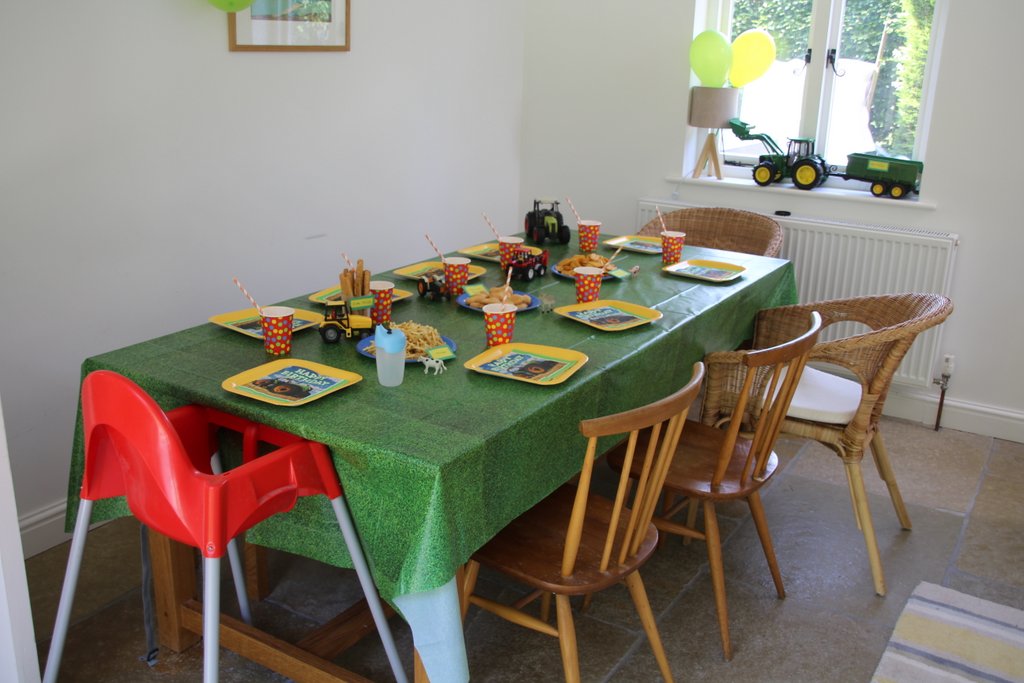
Firstly, I think a themed table-setting really gets you off to a flying start. I browsed Amazon and found this brilliant 'grass' tablecloth for less than 3 pounds, bargain! It'll definitely be usable again for future parties. The tractor napkins were also from Amazon, as were the plain yellow paper plates. Cheap and simple. The spotty cups and plain blue paper plates on which I served some of the food were from Tesco. I dotted the table with various toy tractors and farm animals.


I decided to make all of the food fit in with the theme, but wanted to keep this as simple as possible as well as making foods that your average child will actually eat!


I did however make some 'Cheesy Chicks', just cheese biscuits using Nigella's 'Cheesy Feet' recipe:




Judging from the carnage left after the tea, all the guests enjoyed the meal. I did too (thankfully the mums of Ted's friends are a brilliant bunch) - but obviously I collapsed in a state of exhaustion, glass of wine in hand, as soon as everyone had left!

Firstly, I think a themed table-setting really gets you off to a flying start. I browsed Amazon and found this brilliant 'grass' tablecloth for less than 3 pounds, bargain! It'll definitely be usable again for future parties. The tractor napkins were also from Amazon, as were the plain yellow paper plates. Cheap and simple. The spotty cups and plain blue paper plates on which I served some of the food were from Tesco. I dotted the table with various toy tractors and farm animals.

I decided to make all of the food fit in with the theme, but wanted to keep this as simple as possible as well as making foods that your average child will actually eat!

Well, OK, the kids mostly ignore the crudites! But it makes me feel better to put some out. 😉

Just breadsticks.


Tesco own-brand crisps. I love those bacon ones, and enjoyed the humour of displaying them next to the toy pig!


Obviously you could make your own of all the above hot foods, and if I'd been in a 'Supermum' kind of mood I definitely would have done so. However, my husband was away and my son and I were going out on the morning of the party (in a fabulous co-incidence, it was 'Open Farm Sunday' so we popped over to the local dairy farm to ogle at the awesome machinery!) so I just bought everything from the supermarket.
I did however make some 'Cheesy Chicks', just cheese biscuits using Nigella's 'Cheesy Feet' recipe:

And now the puddings:

I had these cute little foil cases in the cupboard which I'd bought *years* ago from the Dollarstore when we lived in Canada! Great to find a use for them. This was just green jelly with green grapes cut up in it. If I was catering for more children I'd have done some yellow ones too.

I was quite proud of these as I made up the 'recipe' and my son really enjoyed helping me make them. I simply melted a mixture of milk and dark chocolate and threw in raisins and chopped nuts (none of the guests have allergies), then plopped it onto a lined baking tray in suitable 'dollops'.


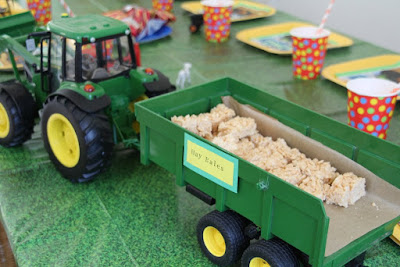
A genius idea from Pinterest was making rice-crispie cakes into hay bales. I displayed these in a trailer.

Lastly, my son's favourite popcorn (Coconut and Vanilla 'Propercorn').
I may not have made all the food myself, but I did manage to create the cake! I had seen some amazing John Deere cakes on Pinterest, but this was one I designed myself; extremely simple but I thought it was effective and Ted loved it.


Subscribe to:
Posts (Atom)